Let the brand lead, not the tool
I pulled colours, type and imagery from the brand’s Instagram into a mood board before touching a page.
Why it matters
Followers arrive from Instagram. The site should feel like a continuation, not a template.
A booking platform for tarot, palm reading and life coaching. My first AI build in 2025, redesigned in 2026 around the brand’s own visual mood.
The client offers tarot readings, palm reading and life coaching, and needed a platform where people could understand each service and book a session.
I designed and built the platform. It was my second project and my first time building with AI instead of hand-coding, using Lovable and Bolt. A year later I redesigned it from scratch.
A client brief, the brand’s Instagram presence, and a mood board I assembled from it.
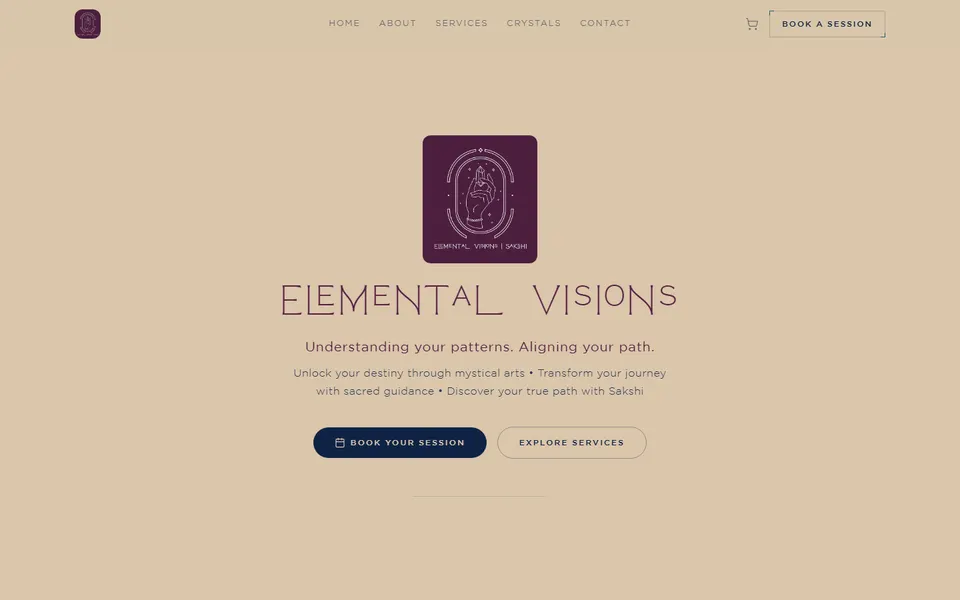
Version one came out of prompt-driven tools, and it looked like it. For the redesign I collected the brand’s Instagram palette, type and imagery into a mood board, then rebuilt every page against it, so the website finally feels like the same brand people already follow.
Design decisions
I pulled colours, type and imagery from the brand’s Instagram into a mood board before touching a page.
Followers arrive from Instagram. The site should feel like a continuation, not a template.
The hero carries two actions only: book a session, or explore services.
The business runs on bookings. Every page leads back to that.
The About section leads with Sakshi’s portrait, the questions that brought her to this work, and what a session gives you: clarity, awareness, alignment.
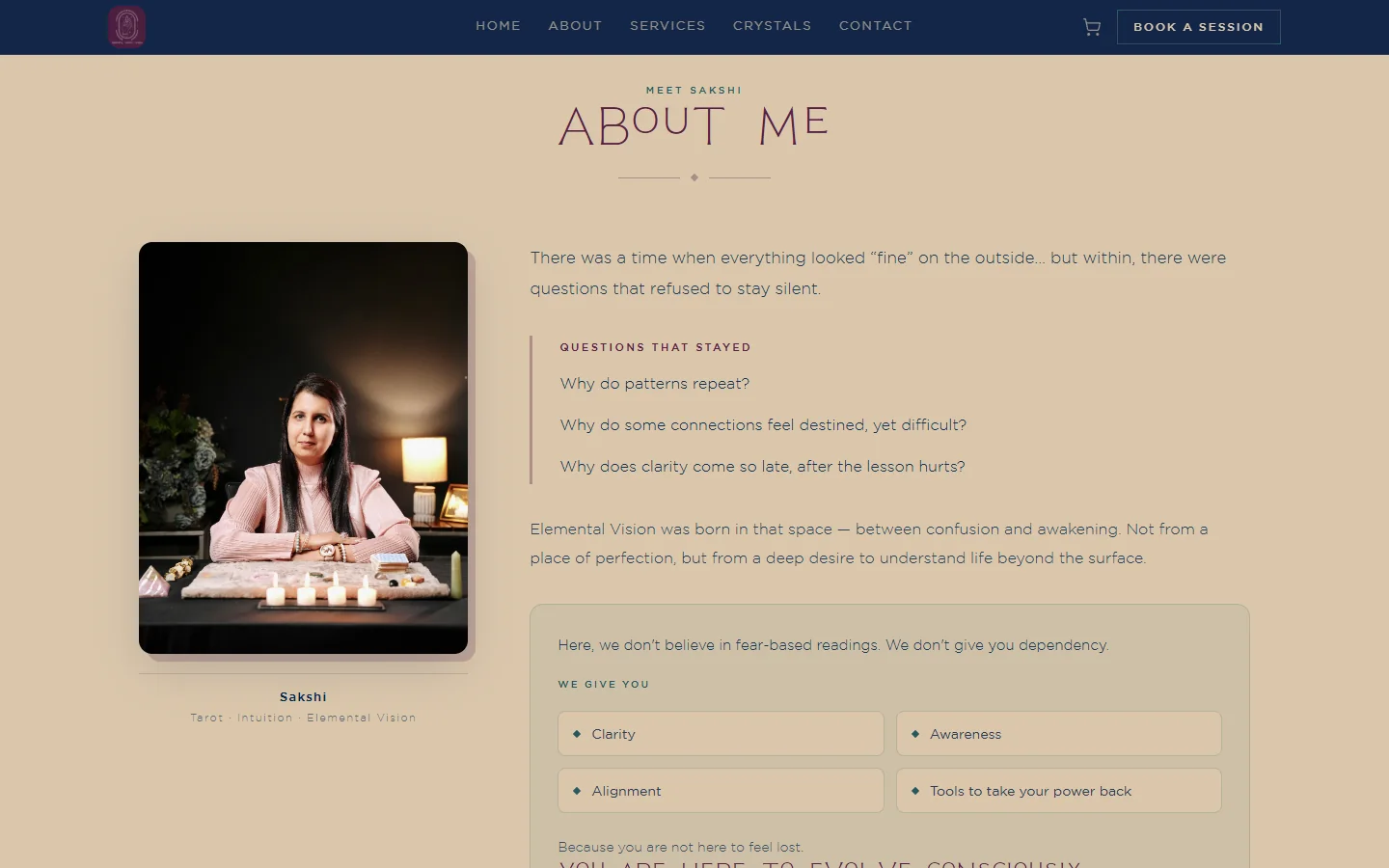
Tarot and coaching are trust purchases. People book a person, not a service, so they meet her before they see a price.
Each service is a navy card with gold line art, framed like a tarot card, with one sentence and a View service button. On phones the cards become a swipeable deck.
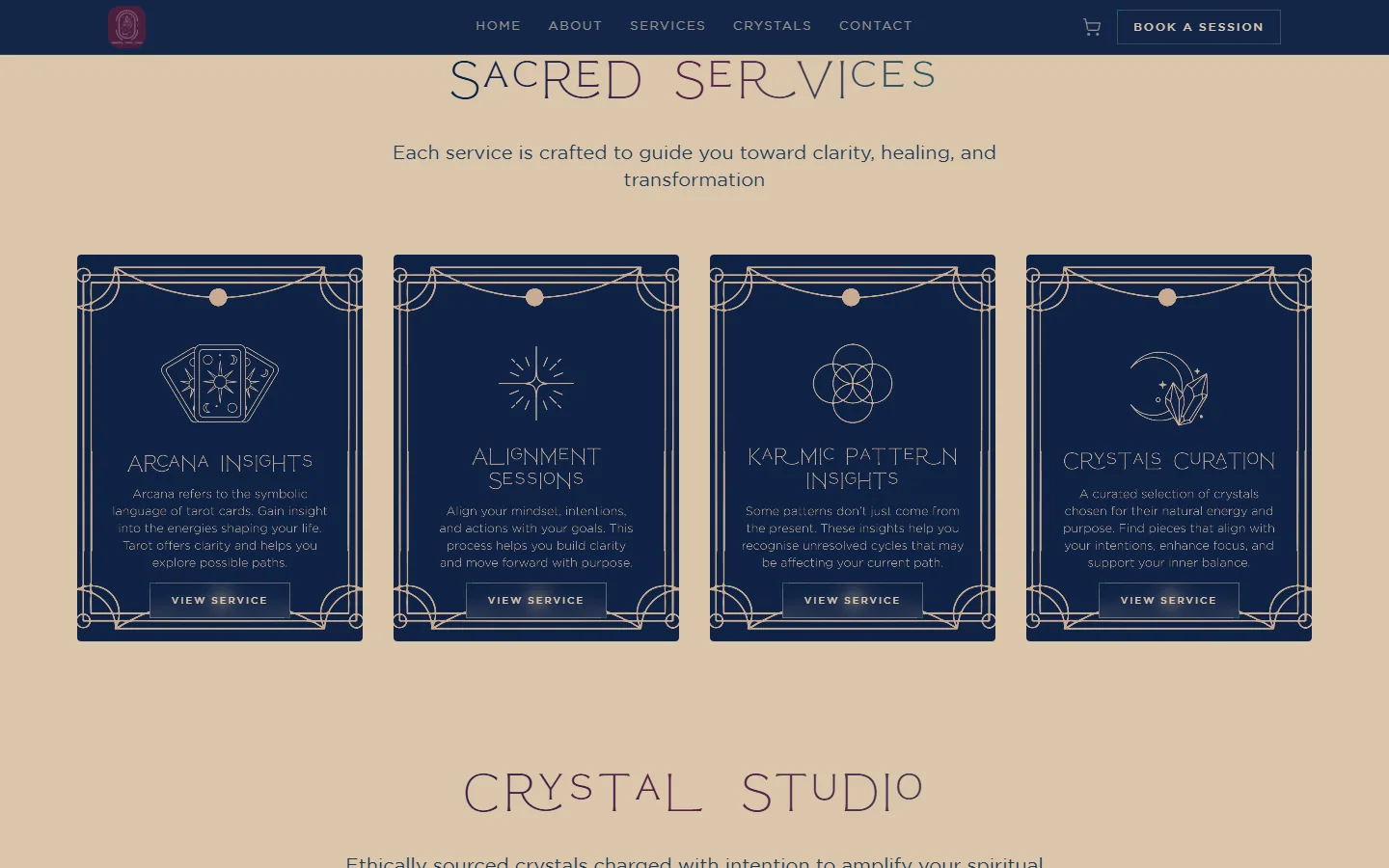
The format itself says what the business is. It turns a plain service list into something that feels like drawing a card.
The Crystal Studio groups 61 products by stone, tags each with intentions like protection or clarity, and adds search plus filters by product type.
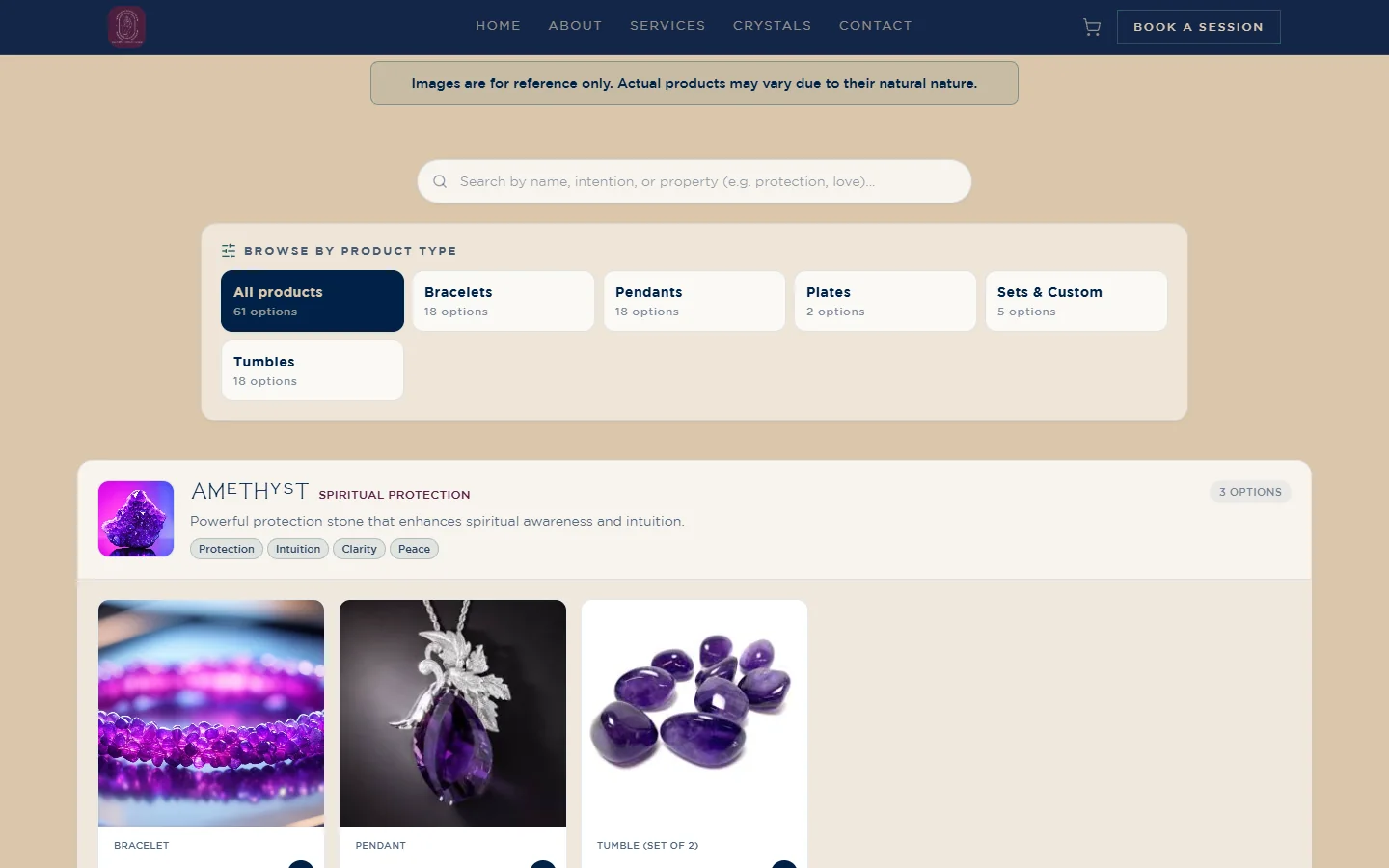
Buyers usually start from a need, not a stone name. Searching “protection” should be enough to find the right piece.
The booking form asks for name, email, service and a short note, then sends it as a WhatsApp message.
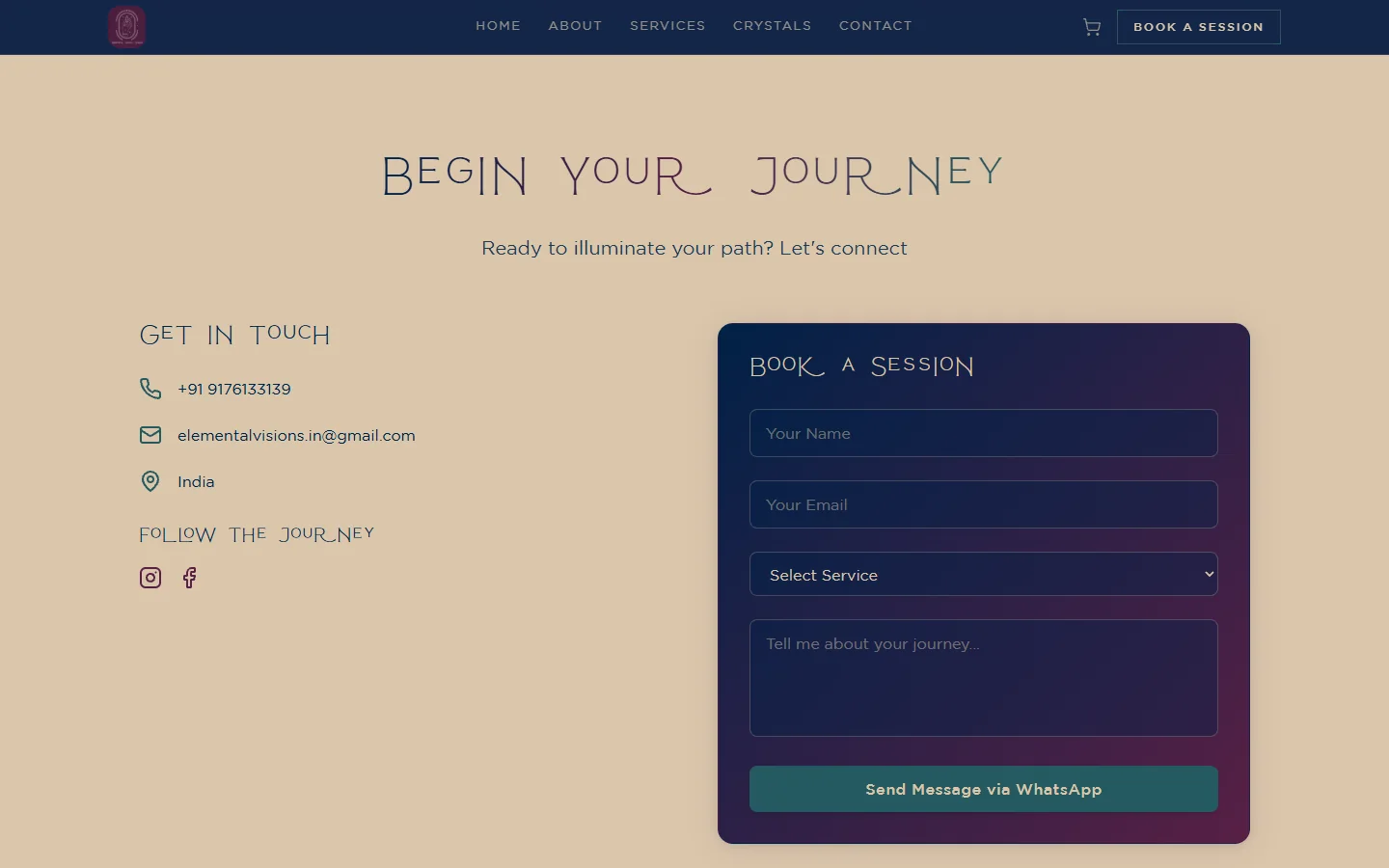
Clients reach the business on an app they already use, and the business gets enquiries without a separate inbox to monitor.
Where it landed
The redesigned site is live. It has not been instrumented for analytics, so this case study documents the design, not traffic results.
Explore live ↗Reflection
Comparing my 2025 and 2026 versions of the same brief is the clearest record of how my eye and my AI workflow changed in a year.
Next, I would add a booking confirmation flow and measure how many visitors reach it.